How to Make Porn Videos A Creator's Professional Guide
Learn how to make porn videos professionally and ethically. Our guide covers consent, equipment, filming, editing, safety, and building a successful brand.
Before you even think about hitting the record button, the real work begins. If you want to make porn videos successfully and responsibly, you have to start with a rock-solid ethical and legal foundation. This means getting crystal clear on enthusiastic consent, understanding the labyrinth of legal requirements like age verification, and figuring out your unique brand.
Nailing these fundamentals isn't just a preliminary step; it's the only way to build a sustainable career and create compelling content that people actually want to see.
Establishing Your Ethical and Creative Foundation
It's tempting to jump straight to brainstorming scenes or shopping for a new camera, but the very first things you do will set the tone for your entire creative journey. Success in this industry isn't just measured by production quality. It’s built on a foundation of safety, legality, and a clear vision for what you're creating.
Skipping this part is a rookie mistake that can lead to a world of hurt—legal trouble, getting banned from platforms, or simply making content that nobody connects with. Think of it like building a house. You wouldn't put up walls without pouring a solid foundation first. The same principle applies here.
The Non-Negotiable Pillar of Consent
Let's be perfectly clear: consent is the single most important element in ethical adult content. It’s not a one-time "yes" you get and then forget about. It's an ongoing, enthusiastic, and open conversation. Real consent has to be given freely, without any pressure, and it can be taken back at any time.
For every single project, this is what that looks like in practice:
- Talk It All Out: Before any clothes come off, have a detailed discussion about what everyone is and isn't comfortable with. Cover boundaries, safe words, and specific acts. Leave no room for assumptions.
- Keep Checking In: During the shoot, make it a habit to check in with your partners. A simple "Are you still good with this?" goes a long way. People's comfort levels can change, and you have to respect that.
- Get It in Writing: A formal model release is non-negotiable. This document is your proof of consent and should clearly outline how the footage will be used, where it will be distributed, and how it will be monetized. It protects everyone involved.
From my experience, consent isn't just a legal shield; it's the key to a better performance. When performers feel safe, respected, and genuinely enthusiastic, they bring an energy and authenticity to the screen that you just can't fake.
Navigating the Legal and Platform Maze
The legal side of adult content can feel like a minefield, and it changes depending on where you live. Pleading ignorance won't get you out of trouble, so doing your homework is mandatory. You absolutely must verify the age and identity of every single performer, which usually means collecting and securely storing copies of government-issued IDs.
If you’re in the U.S., you'll also need to get familiar with 2257 regulations, which require meticulous record-keeping.
On top of that, every platform you use will have its own rulebook. Sites like OnlyFans and Fanvue have very specific policies on what is and isn't allowed. Some platforms might ban certain kinks or specific scenarios. Reading their Terms of Service isn't just recommended—it’s a fundamental part of running your business.
This flowchart breaks down how these foundational pieces fit together.
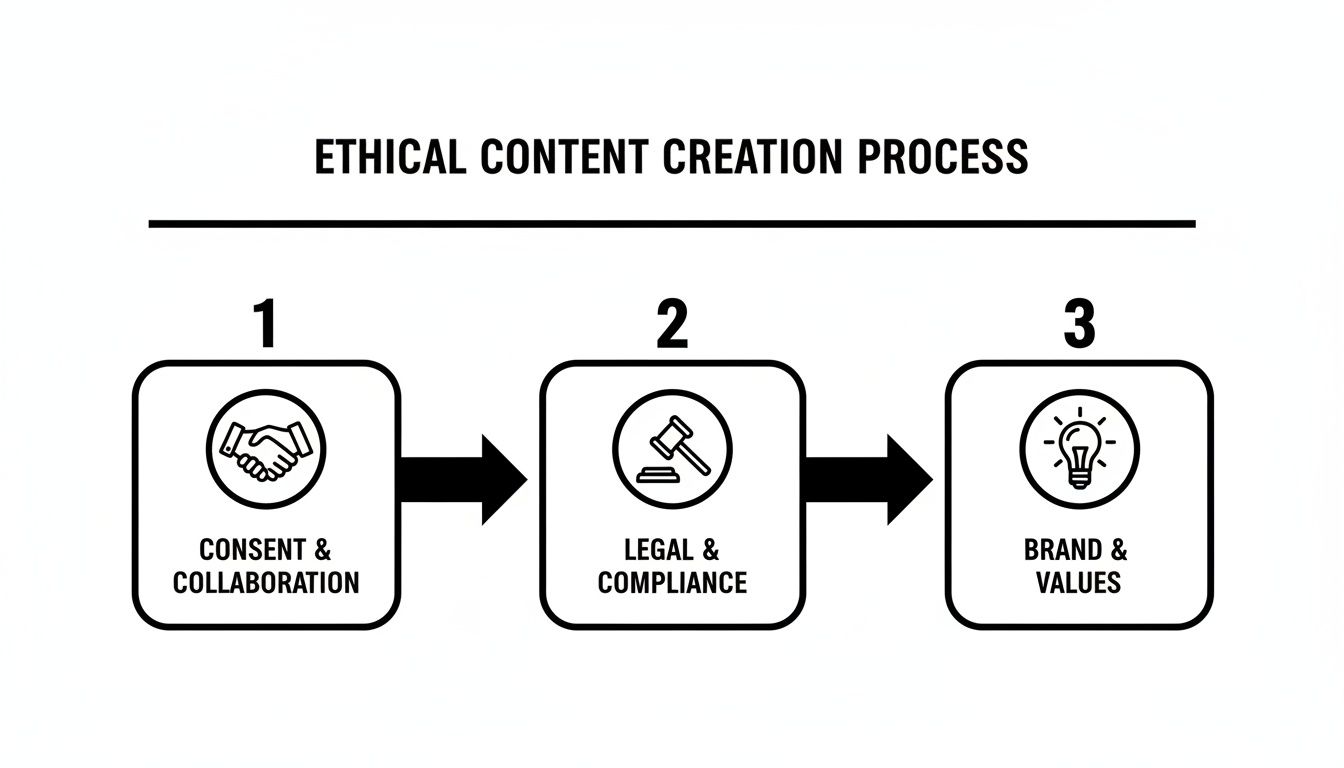
As you can see, you have to move from consent and legal compliance to brand development in that order. It ensures all your ethical and business ducks are in a row before you get creative.
Defining Your Creative Brand and Niche
Once the serious business is handled, you can finally dive into the fun part. What makes your content different? In a sea of creators, your brand is what helps you stand out.
Start by asking yourself a few key questions:
- What’s my specific niche? Am I making couple content, solo videos, or focusing on a particular kink?
- What’s the overall vibe? Is it cinematic and polished, raw and authentic, or maybe even comedic?
- Who am I trying to reach?
Defining this early on will make every other decision—from scripting to marketing—so much easier. A strong, clear brand is what attracts a loyal fanbase that genuinely connects with your work. It's how you turn a hobby into a career.
For those looking to explore even more creative avenues, it's also worth looking into what is synthetic media. AI tools can offer unique visual styles or a way to maintain anonymity, but remember: the core rule of enthusiastic consent applies to any use of a person's likeness, AI-generated or not.
2. Choosing the Right Gear for Professional Quality
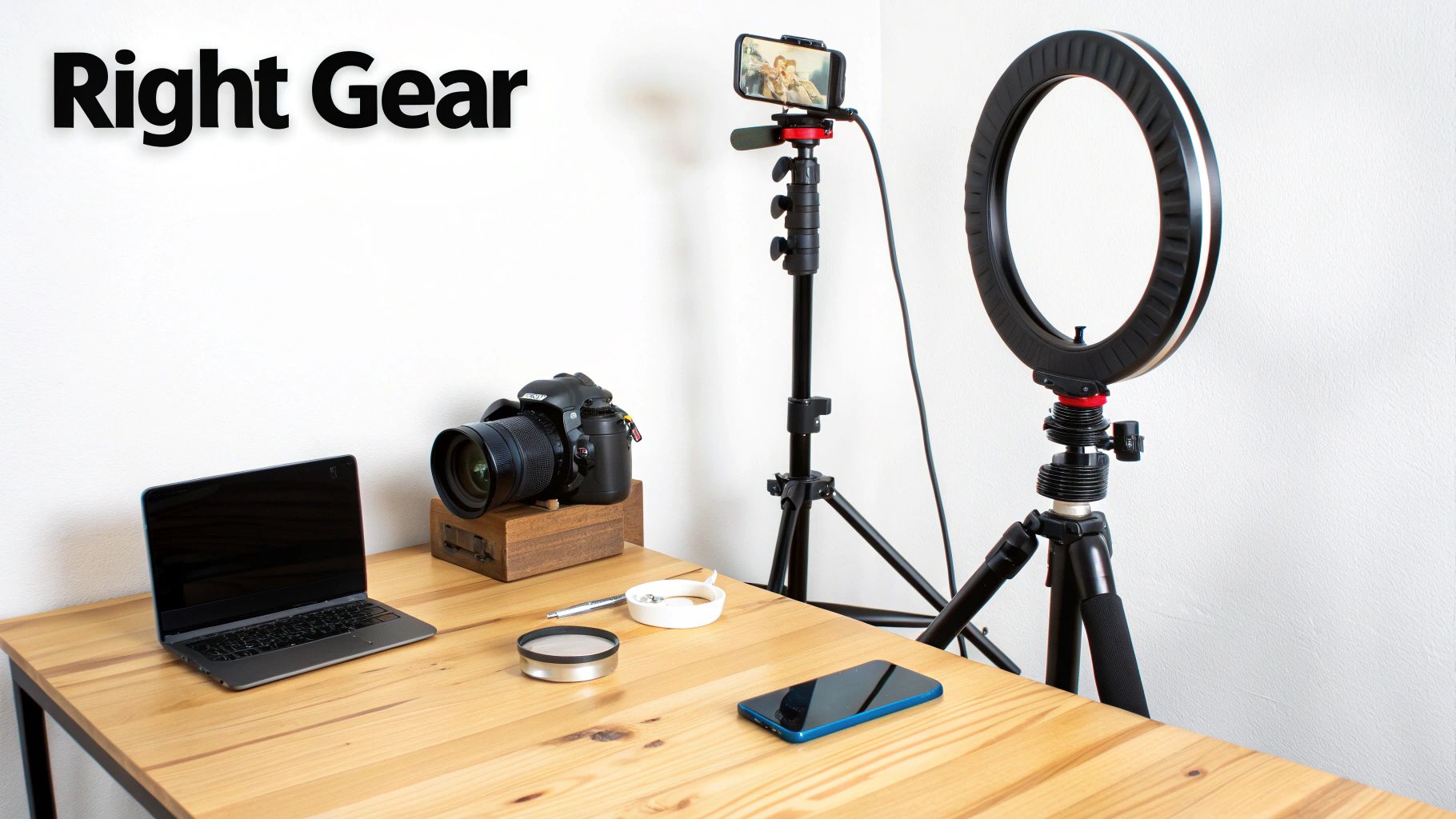
You don't need a Hollywood-sized budget to produce incredible-looking content, but your choice of gear absolutely makes a difference. Your creative vision is what gets you started, but the technical quality is what separates amateur clips from professional videos people are happy to pay for.
The great news? You can probably start with the phone in your pocket. Modern smartphones have ridiculously good cameras capable of shooting in 4K. The real secret, though, isn't the camera itself—it's how you support it with good lighting and clear audio. Nail those two things, and you're already ahead of the game.
Upgrading Your Camera: Smartphone vs. Mirrorless
Most creators kick things off by filming with their phone. It’s easy, it’s right there, and the results can be surprisingly powerful. If you’re using a recent model, you’ve got a fantastic tool at your fingertips. The trick is to get out of "auto" mode. Manually lock the focus and exposure so the camera isn't constantly trying to readjust while you're in the middle of a great take.
Sooner or later, you'll likely crave more creative control, and that’s when a dedicated camera becomes a game-changer. A mirrorless camera is a phenomenal investment. They let you swap lenses, perform brilliantly in low light, and give you that cinematic, shallow depth-of-field look where your subject is crystal clear and the background just melts away. That one feature alone can make your videos feel instantly more high-end.
A few tips depending on your path:
- Smartphone: Always use a tripod to kill shaky footage. Download a pro camera app to get manual control over settings like ISO, focus, and white balance.
- Mirrorless Camera: Look for models with solid autofocus, 4K video, and a flip-out screen. That last one is a lifesaver when you're filming yourself.
The Critical Role of Lighting
Nothing screams "amateur" faster than bad lighting. A dark, grainy image is an instant turn-off. Your goal is to create soft, flattering light that shows everything clearly without casting harsh, distracting shadows.
The industry standard is a three-point lighting setup for a reason: it works. This involves a key light (your main, brightest light), a fill light (to soften shadows created by the key), and a backlight (to create separation from the background).
But you don't have to start with all three. Even one good light source is a massive improvement.
A $50 softbox or a quality ring light will do more to improve your video quality than a $1,000 camera upgrade. If you have a limited budget, spend it on lighting first. Every time.
For a practical start, a large ring light is perfect. It gives you even, direct light that smooths out shadows on the face and body. Got a bit more to spend? Grab two softboxes and place them at 45-degree angles to your subject for a beautifully diffused, professional look.
Why You Cannot Ignore Audio Quality
Here’s a hard truth: viewers will forgive video that’s a little soft, but they have zero patience for bad audio. If your sound is muffled, echoey, or full of background noise, they’re gone. Click.
Your phone or camera's built-in mic is designed to hear everything in the room, which is exactly what you don't want. It picks up the air conditioning, the refrigerator humming, and the sound bouncing off the walls.
This is a non-negotiable fix: you need a dedicated microphone placed close to your talent.
A few simple and effective mic options:
- Lavalier Mics: These are the little clip-on mics. They're fantastic for capturing dialogue or intimate sounds without the microphone getting in the shot.
- Shotgun Mics: These mount right on top of your camera and are designed to capture sound from whatever the lens is pointing at, rejecting noise from the sides and back.
Grabbing a simple external mic is a cheap upgrade that pays for itself immediately. It ensures your audio is just as engaging as your visuals, pulling your audience deeper into the experience.
To help you get started, here’s a quick breakdown of what your initial gear investment might look like at different budget levels.
Starter Kit Equipment Comparison
| Equipment | Budget Option (e.g., Smartphone) | Mid-Range Option (e.g., Entry-Level DSLR) | Pro-Level Option (e.g., Mirrorless Camera) |
|---|---|---|---|
| Camera | Modern Smartphone (iPhone 13+, Google Pixel 6+, Samsung S21+) | Canon EOS M50 Mark II or Sony ZV-E10 | Sony A7 IV or Canon EOS R6 |
| Lighting | 18" Ring Light | Two-piece Softbox Kit (e.g., Neewer) | Aputure Amaran 100d/200d with a large softbox |
| Audio | Wired Lavalier Mic (e.g., Rode smartLav+) | Rode VideoMicro or Wireless Go II | Shotgun Mic (e.g., Rode NTG3) or Pro Wireless System |
| Stabilization | Small, flexible tripod (e.g., Joby GorillaPod) | Sturdy Video Tripod with Fluid Head | Tripod + Gimbal (e.g., DJI Ronin) |
Choosing your gear really comes down to balancing your budget with your ambitions. You can get amazing results with just a phone and a ring light, but upgrading specific pieces over time will unlock new creative possibilities. For more ideas, check out this guide on some of the best content creation tools available, which covers more than just cameras.
Directing and Filming Compelling Scenes
This is where the rubber meets the road—the moment your planning and technical setup come together to create the actual scene. The difference between a bland, amateur video and something that feels intimate and engaging often comes down to solid directing and intentional filming. It’s not about having a perfectly polished script; it's about having a clear vision and the confidence to guide the action.
Even if you’re shooting a simple, unscripted scene, having a rough outline is crucial. Knowing your starting point, the key moments you want to capture, and how the scene should conclude gives you a basic narrative structure. This simple roadmap keeps the action from feeling aimless and ensures your final cut tells a story that keeps your audience watching.
Crafting a Narrative Through Storyboarding
You don't need to be an artist to make a storyboard work for you. Think of it as a visual roadmap for your scene. It can be as simple as a few stick-figure sketches or just a bulleted list of the shots you want to get. Its real purpose is to force you to think visually before you start recording.
A basic shot list for a scene might look something like this:
- Shot 1: Wide shot of the bedroom to set the scene.
- Shot 2: Medium shot of performers as they start interacting, building a connection.
- Shot 3: Tight close-up on facial expressions or hands to capture intimacy.
- Shot 4: Point-of-view (POV) shot from one performer's perspective to make it feel immersive.
Planning like this helps you avoid just pointing the camera randomly. It pushes you to think about different angles and perspectives, which adds rhythm and a professional feel to your final video.
Essential Filming Techniques for Impact
Once you have your plan, the execution comes down to a few core filming techniques. Getting these basics right will immediately make your content look more deliberate and cinematic. The most important of these is shot composition.
A timeless trick is the Rule of Thirds. Imagine your screen has a 3x3 grid overlaid on it. Instead of sticking your subject right in the center square, you place them along the grid lines or where the lines intersect. This one small change instantly creates a more dynamic and visually appealing shot.
Many of the skills that make for good photography also apply to video, so it's worth learning how to improve photo quality.
Your camera angles are powerful storytelling tools. A shot from a slightly low angle can make a performer seem powerful and dominant. A high angle can create a sense of vulnerability or submission. Mix it up—wide, medium, close-up—to control the scene's pacing and ramp up the emotional intensity.
Guiding Performances and Creating Comfort
Directing is one of the most vital skills you'll develop. Your number one job is to be a clear, calm communicator and create an environment where everyone feels safe and comfortable. When performers feel secure, they can relax and deliver a much more natural and compelling performance.
Before you even think about filming, walk through the scene plan with your talent. Explain the shots you're going for and the overall vibe you want to create. During the shoot, offer positive and specific feedback. Instead of a generic "that was great," try something like, "The way you looked at the camera right there was perfect—let's get more of that."
Tips for Effective Direction:
- Be Specific: Vague instructions like "be sexier" are useless. Tell them exactly what you mean ("try arching your back a little more here").
- Show, Don't Just Tell: If you're having trouble explaining a pose or an action, demonstrate it yourself.
- Keep the Vibe Positive: A stressed-out set leads to stiff, awkward performances. Keep the energy light and encouraging.
- Respect All Boundaries: If a performer expresses discomfort, you stop. Immediately. The plan is always second to their well-being.
If you’re filming yourself, you're both the director and the talent. A tripod is absolutely essential for stable, professional-looking shots. A small Bluetooth remote for your camera or phone is a game-changer, letting you start and stop recording without fumbling with the device. Position a monitor or flip your phone's screen so you can see yourself, allowing you to check your framing and focus as you go.
6. Editing Your Footage and Using AI Enhancements
Once you’ve put the cameras away, the second phase of creation begins. Post-production is where your raw footage gets its soul. This is your chance to shape the narrative, fix any small goofs from the shoot, and give your video the polished, professional feel that keeps viewers coming back.
Think of it this way: your raw clips are just the ingredients. The edit is the recipe that turns them into a masterpiece. A few smart cuts, a bit of color tweaking, and some audio cleanup can transform a good scene into something unforgettable.
The Essentials of Post-Production
Before you can work your magic, you need the right tools. Finding the best video editing software for your needs is step one. Many creators get their start with powerful, free options like DaVinci Resolve or user-friendly apps like CapCut. You don't need to be a Hollywood editor overnight; just get comfortable with the basics.
Your editing workflow will generally boil down to a few key tasks:
- Assembling and Trimming: Start by dragging your best takes onto the timeline. Your first job is to snip off the clapperboard, the "are we rolling?" moments, and any awkward pauses. This is where you begin to build the rhythm and pace of the scene.
- Color Correction and Grading: Ever notice a shot looks a little too orange or a bit washed out? Color correction fixes that, ensuring a consistent and natural look across all your clips. Color grading is the more artistic step where you apply a specific visual style—maybe a warm, intimate glow or a cool, moody blue—to set the tone.
- Audio Mixing: Clean, clear audio is non-negotiable. This means balancing dialogue with music, leveling out any sounds that are too loud or too quiet, and killing distracting background noise. If your audience has to strain to hear what's going on, you've already lost them.
The most effective editing is often invisible. Your goal is to guide the viewer’s attention seamlessly, cutting at just the right moment to heighten the emotion and action without them even noticing the transition. You're aiming for a smooth, immersive experience, not a highlight reel of flashy effects.
Leveraging AI for Anonymity and Enhancement
Artificial intelligence isn't just a buzzword anymore. It's a practical toolkit that can solve some of the biggest challenges for adult content creators, especially around privacy and quality. But with great power comes great responsibility.
A fantastic and straightforward use for AI is upscaling footage. Let's say you have an older clip or something shot on a less-than-stellar camera. AI tools can intelligently sharpen the image, blowing it up to crisp HD or even 4K quality without it looking like a pixelated mess.
Ethical AI Use and Consent
This is where things get serious. The most potent use of AI in this space is altering a person's likeness, like with face or body swapping. While this can be a game-changer for performers who want to remain anonymous, the ethical line is absolute and cannot be crossed.
Enthusiastic and explicit consent is mandatory.
You absolutely must have a clear, documented agreement from anyone whose likeness will be altered with AI. This isn't a "hey, is this cool?" conversation. It's a specific contract that details exactly how their image will be modified and used. Using this technology on someone without their full, informed permission is a massive ethical and legal violation.
When handled responsibly, however, AI opens up some incredible doors:
- Anonymity: You can use face-swapping technology to protect a performer's real-world identity while still creating believable, engaging content.
- Character Creation: For certain types of content, you can generate entirely new AI characters, bypassing the need for a live performer altogether.
- Creative Enhancement: AI can help you add digital backgrounds or special effects that would be too expensive or difficult to shoot in real life.
These AI tools are becoming more accessible by the day. To get a better sense of how this works in practice, you can explore our guide on Runway video editing and see what's possible with modern platforms.
Monetizing Your Content and Building Your Brand
You’ve done the hard work of creating fantastic content. That’s a huge win, but it’s really only half the job. Now it’s time to shift your thinking from artist to entrepreneur and figure out how to get your videos in front of an audience that’s willing to pay for them. This is where smart distribution, effective marketing, and building a real community come into play.
The good news is, you're entering a booming market. The global digital adult content space is projected to hit a staggering $201.1 billion by 2033. That explosive growth signals a massive appetite for unique, independent content, creating a perfect runway for new creators to launch a career.
Choosing Your Monetization Platforms
One of the first big decisions you'll make is where to sell your content. There’s no single "best" platform—the right one for you depends on your brand, your style of content, and how much control you want to have. Each option has its own trade-offs.
Here’s a quick rundown of the main choices:
- Subscription Sites (e.g., OnlyFans, Fanvue): These are fantastic for building a steady, recurring income. Fans pay a monthly fee for access, and you can boost your earnings with pay-per-view (PPV) messages and tips. The trade-off? You have to play by their rules and content policies.
- Clip Sites (e.g., ManyVids): Think of these as marketplaces where you sell individual videos, photo sets, and other goodies directly. This model is great if you produce distinct scenes rather than a continuous stream of content. You generally get more freedom with what you can sell.
- Direct Sales via Your Own Website: This route gives you 100% control over everything—your content, branding, and pricing. You also keep a much bigger slice of the pie. The catch is that you're on the hook for all the marketing, payment processing, and site maintenance yourself.
I see a lot of successful creators using a hybrid model. They'll use a site like OnlyFans to build a loyal community, then direct their top fans to a personal website for exclusive, premium content. It’s a great way to get the best of both worlds.
Building Your Audience and Brand Identity
Your brand isn't just a cool name or a logo. It’s the story you tell and the real connection you make with your fans. A strong brand is what convinces someone to subscribe to you instead of the thousands of other creators out there. This is where you have to get strategic with promotion and genuine engagement.
Social media is your best friend for promotion, but you have to be smart about it. Platforms like Twitter (X) and Reddit have communities that are generally more welcoming to adult creators, but you still need to read their terms of service inside and out. Use them to post teasers and offer glimpses of your personality. A great way to do this is by creating authentic behind-the-scenes content.
Authentic engagement means treating your fans like people, not just wallets. Reply to their comments, run polls, and ask them what they want to see next. That back-and-forth builds real loyalty and makes your subscribers feel like they're a part of your journey. If you want to dive deeper into turning your work into a business, our guide on monetising digital content has more ideas for you. https://createinfluencers.com/blog/monetising-digital-content
Smart Pricing for Your Content
Pricing can feel like guesswork at first, but a few simple principles will get you on the right track. Your subscription price should reflect the value you're delivering month after month. For most new creators, somewhere between $5 to $15 per month is a solid starting point. You can always raise your price later as your content library grows and you build a bigger following.
Beyond your subscription, it's smart to have a clear pricing structure for other things you offer.
Common Pricing Tiers:
- PPV Messages: Sell exclusive videos or photo sets that aren't on your main feed for a one-time fee.
- Custom Videos: This is often where the big money is. Base your price on the video's length, how complex it is, and any specific requests. Whatever you do, don't underprice your time and effort on custom work.
- Tipping: Make it obvious and easy for fans to show their appreciation with tips. This can add up to a significant chunk of your income.
Common Questions About Making Adult Videos
Diving into adult content creation is exciting, but it naturally comes with a ton of questions. Beyond figuring out what to film, there are real-world concerns about safety, staying on the right side of the law, and just getting started without making a mess of things.
Think of this as your no-nonsense FAQ. We’re tackling the big questions I see creators ask all the time, from the absolute first things you need to do, to protecting your identity, and whether that phone in your pocket is actually good enough to build a business with.
What Are the Absolute First Steps Before Filming?
Okay, let's get one thing straight. Before you even think about buying a ring light or planning a scene, your first moves have to be about ethics and legalities. Trust me, rushing this part is a recipe for disaster.
Your initial checklist shouldn't have anything to do with cameras; it's all about protection. First, you have to get familiar with the specific laws on adult content production where you live—your city, state, and country. This means understanding the age of consent and any record-keeping requirements, like the 2257 regulations in the United States.
Next, you need a rock-solid process for consent with every single partner. This isn't a one-time chat. It's an ongoing dialogue about boundaries, what feels good, and what's off-limits. Finally, pick your platform and study its terms of service like you're cramming for a final exam. Getting your account shut down after you’ve already shot content is a massive, and totally preventable, setback.
Only after you have a clear legal framework, a solid consent process, and a deep understanding of platform rules should you even start thinking about the creative stuff. These aren't just suggestions; they are the non-negotiable pillars of a sustainable career.
How Do I Protect My Privacy and Safety?
Keeping your real-world identity separate is one of the most important jobs you have as a creator. The whole point is to build a secure wall between your personal life and your creator persona.
Start with the basics. Use a stage name for everything and create separate email and social media accounts that are only for your brand. Never use your real name or drop personal details—like your city, your day job, or favorite local spots—in your content or DMs. A good VPN is also a smart investment for any online activity tied to your work.
You also have to be incredibly mindful of your filming environment.
- Backgrounds: Get rid of any personal photos, unique art, or even a piece of mail that could give you away.
- Windows: Pay attention to what’s visible outside. A recognizable landmark in the background could instantly compromise your location.
- Tattoos: Distinctive tattoos are dead giveaways. You can use makeup to cover them or just plan your shots to keep them out of the frame.
When it comes to getting paid, always use payment processors that act as a middleman. This shields your personal banking information from subscribers and keeps your finances secure.
Can I Really Make Good Videos With My Phone?
Absolutely. The camera in a modern high-end smartphone is more than powerful enough to produce professional-quality, sellable content. You'd be surprised how many top creators still use their phones for a huge chunk of their work.
The secret isn’t the phone itself, but everything you control around it. What separates pro from amateur footage almost always comes down to mastering three things: lighting, stability, and audio.
- Lighting: This is the great equalizer. A simple, affordable ring light or a couple of small LED panels will instantly make your footage look ten times better. Good lighting kills those grainy shadows and creates a clean, polished look.
- Stability: Nobody wants to watch shaky, handheld footage. It just screams amateur. A simple tripod is a non-negotiable piece of gear that will immediately stabilize your shots and boost their quality.
- Audio: Let's be honest, your phone's built-in mic is not your friend. It picks up every little echo and background hum. An inexpensive lavalier mic that plugs right into your phone will capture crisp, clear audio, making your videos way more immersive and enjoyable.
By investing just a small amount in these three areas, you can turn the device you already carry everywhere into a seriously powerful production tool.
Ready to create stunning visuals without the hassle of a traditional photoshoot? CreateInfluencers allows you to generate lifelike AI characters and produce high-resolution images and videos in minutes. Explore endless creative possibilities and build your unique brand today. Start creating for free at CreateInfluencers.com.